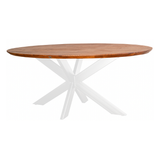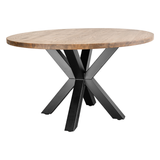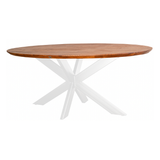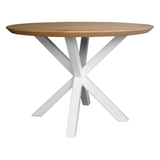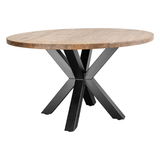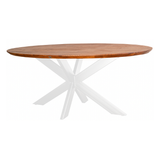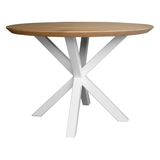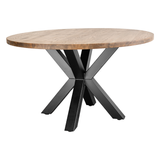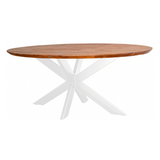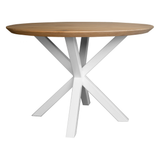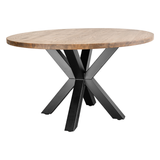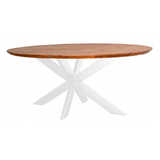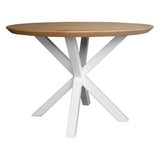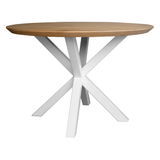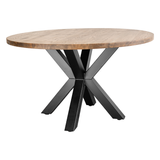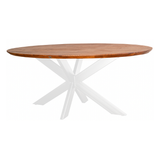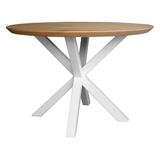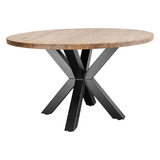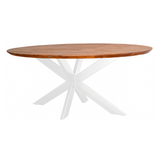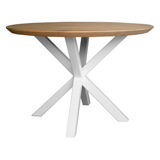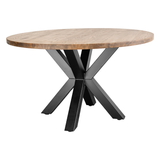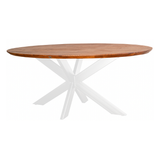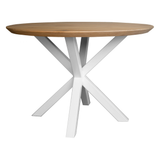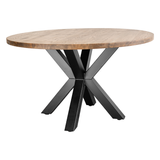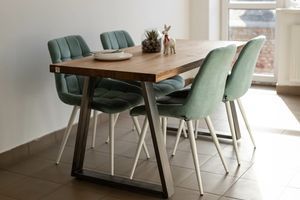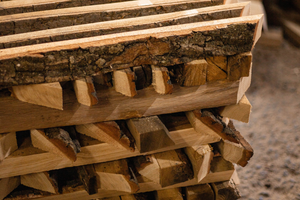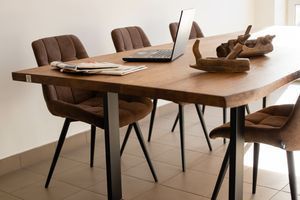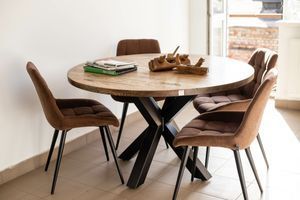
A round table is one of those pieces of furniture that almost always adds a touch of cosiness to a room. This is especially true when it comes to natural oak. A table like this looks substantial and elegant, and will last for years.
But when choosing a round table, people often make the same mistake — they focus solely on its appearance. It is only after they have bought it that they realise the table is either too big for the room or, conversely, too small for the family.
Therefore, before placing an order, it is important to choose the right table diameter and work out how much space it will actually take up in the room.
What size round table would be suitable?
It’s quite simple: the more people use the table every day, the larger the tabletop needs to be.
| Number of people | Optimal diameter |
|---|---|
| 2 people | 90 cm |
| 4 people | 100–110 cm |
| 6 people | 120–130 cm |
| 8 people | 140–160 cm |
| 10 people | 170–180 cm |
For a standard kitchen or flat, a table measuring 100 or 110 cm is usually the preferred choice. This is a size that doesn’t overwhelm the space, yet is comfortable to sit at every day.
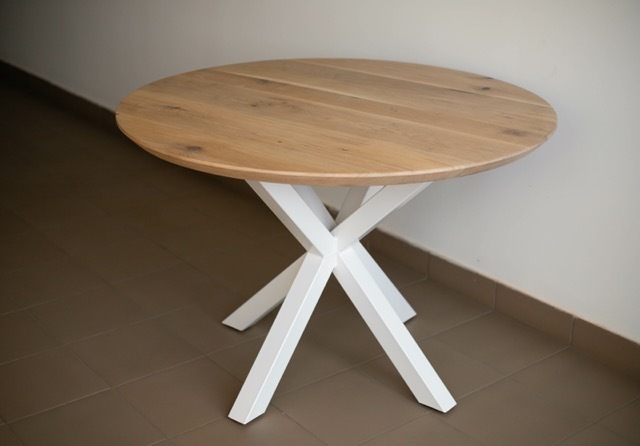 If the open-plan kitchen-living room is spacious, then models measuring 120–140 cm will look good.
At Woodman Group, we manufacture round tables with diameters ranging from 90 to 180 cm in 10 cm increments, so you can find the perfect size for almost any room.
An important point that is often overlooked
You need to take into account not only the table itself, but also the space around it.
Even the most beautiful oak table will be uncomfortable if the chairs are pushed up against the wall or people can’t walk past properly.
We recommend leaving at least:
- approximately 70 cm from the chair to the wall;
- approximately 100 cm for a normal passageway.
This is particularly important in the kitchen, where there is always someone moving about.
Why solid oak?
These days, there are plenty of tables made from veneer, thin sheets or materials that merely imitate wood. They may look quite good in photos, but in real life the difference is very noticeable.
Solid oak gives the table a completely different feel:
- different weight; different texture;
- different strength;
- what it looks like after a few years of use.
We use a 3 cm thick oak worktop. This ensures that the table does not look like a ‘lightweight piece of furniture’, but rather a substantial, solid piece of wood.
And, importantly, oak stands up well to daily use. It’s not the sort of material that will lose its appeal after a year.
Which worktop edge is best to choose?
It’s a small detail that people rarely notice at first. But it is the edge of the worktop that has a significant impact on the table’s overall appearance.
The most popular choices are:
- a 90° straight edge — a more substantial and classic look;
- a 45° cut — a more modern option;
- a 30° bevel makes the worktop appear lighter.
If the interior is more minimalist, bevelled edges usually look better.
A round or an oval table?
If space allows, a round table looks very attractive and cosy. However, for narrow kitchens or long rooms, people often opt for oval tables. They offer more seating without looking as bulky as rectangular ones. An oval table is therefore a good compromise between practicality and appearance.
A good oak table is a purchase that will last for years. It’s not just about how it looks, but also about getting the right size, the thickness of the tabletop and the quality of the wood itself.